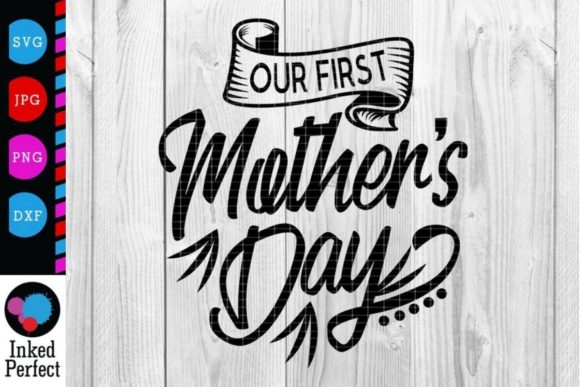
Our First Mother s Day: Real-World Embroidery Review
As a designer who spends half my life staring at stitch charts and the other half troubleshooting machine jams, I don’t just look at an embroidery file; I look at how it will behave on actual fabric. When I first pulled up Our First Mother s Day, my immediate thought wasn't about the sentiment, but about the execution. This is a Crafts category item that falls squarely into the Graphics type, which usually means we are dealing with text-based or illustrative vector art converted for stitching. For anyone running a small shop, selling on Etsy, or creating custom apparel for clients, the difference between a design that looks good in a digital preview and one that stitches cleanly is everything.
First Impressions and Visual Personality
The phrase "Our First Mother’s Day" carries a heavy emotional weight. It is sentimental, celebratory, and inherently personal. From a design perspective, this dictates a specific aesthetic. The layout needs to be legible, warm, and inviting. In this case, the design feels like it was crafted to sit comfortably on soft fabrics—think cotton onesies, muslin swaddles, or cozy fleece sweatshirts. The visual personality leans towards boutique-style minimalism rather than overly complex, dense fills. This is crucial because it suggests a design that respects the viewer's eye without overwhelming the garment with too much thread coverage.
When evaluating any embroidery project, the mood of the piece must align with its intended use. Here, the mood is tender and familial. It works beautifully for a matching set, as suggested by the product description, where a mother and baby wear complementary pieces. The graphic nature of the text allows it to function as a focal point, drawing attention to the chest area of a shirt or the center of a tote bag. It doesn't need excessive embellishment to stand out; the message itself provides the visual anchor.
Real-World Application: Where This Design Shines
I have spent years testing designs on various substrates, and I can confidently say that Our First Mother s Day finds its sweet spot in personalized gifts and boutique merchandise. Let’s talk about a realistic scenario: You are preparing inventory for a holiday craft fair or fulfilling a rush order for a client who wants a unique gift for their new mom.
This design excels on custom apparel such as t-shirts and hoodies. Because it is a machine embroidery design likely utilizing a mix of fonts and perhaps simple decorative elements, it translates well to standard jersey knits or heavier cotton blends. Imagine a soft grey sweatshirt with the design embroidered in white or pastel pink thread. The contrast creates a clean, professional look that appeals to modern parents who prefer understated elegance over loud graphics.
Beyond clothing, this embroidery file is perfect for accessories. A canvas tote bag design featuring this quote becomes an instant bestseller. Mothers often carry diapers, wipes, and bottles, so having a durable, stylish bag with a meaningful message adds practical value. Similarly, consider using this for apron embroidery. New mothers are often cooking and caring for infants simultaneously; a kitchen towel or apron with this design bridges the gap between domestic utility and sentimental keepsake.
For those selling digital products, this design serves as excellent design assets for mockups. Even if you aren't physically embroidering every item, showing a high-quality image of this design on a baby blanket or a nursery pillow cover can drive significant engagement on social media platforms like Pinterest or Instagram. It fits seamlessly into the aesthetic of Etsy sellers who specialize in holiday embroidery and seasonal collections.
Technical Considerations and Potential Pitfalls
No design is without its challenges, and honest review requires looking at where things might go wrong. While Our First Mother s Day appears straightforward, there are specific areas where an Etsy seller or craft business owner needs to exercise caution.
Stitch Density and Fabric Texture: If the design includes thin lines or delicate lettering, you must ensure your stabilizer is robust enough to prevent puckering. Thin fabrics, such as lightweight jersey or sheer cotton, may require cut-away stabilizer to maintain integrity during washing. Conversely, textured fabrics like bouclé or thick wool can obscure fine details. Always test the design on scrap fabric that matches the final product’s texture. If the thread colors do not provide enough contrast against a dark fabric background, the design will lose its impact. A black satin stitch on a navy blue shirt might disappear entirely under indoor lighting.
Hoop Size and Placement: Check the dimensions of the design before starting. If you are placing this on a curved surface like a baseball cap or a beanie, the distortion of the fabric can stretch the text, making it harder to read. For embroidered patches, ensure the border is sufficient to allow for trimming and finishing without cutting into the critical letters. Small hoop sizes limit the complexity of the design, so verify that all details remain visible when scaled down.
Dense Stitch Areas: Avoid placing this design on items that will undergo frequent, heavy-duty washing, such as workwear or outdoor gear. Over time, even high-quality threads can fade or fray if the stitch density is too high for the fabric weight. For a personalized gift meant to be kept as a memory, this is less of a concern, but for commercial merchandise, durability is key.
Practical Designer Notes for Success
To ensure your finished product meets professional standards, follow these steps before committing to bulk production or client orders:
- Test on Scrap Fabric: Never assume a design will stitch perfectly based on the digital preview. Run it through your machine on the exact fabric and stabilizer combination you plan to use.
- Check Thread Contrast: Use a black-and-white filter on your mockup to see if the text remains legible. If the contrast is low, swap out the thread color.
- Inspect Small Details: Zoom in on the digital file. Are there tiny gaps in the satin stitch borders? Will they snag? Are the corners of letters sharp or rounded?
- Confirm Licensing: Before selling finished product items or distributing this as a digital embroidery file, double-check the license terms. Commercial rights vary widely, and violating them can lead to serious legal issues.
- Review Stabilizer Choice: For knit fabrics, a tear-away stabilizer might suffice for light designs, but woven fabrics often need more support. Choose wisely to prevent distortion.
Final Verdict on Value and Appeal
In the crowded market of handmade goods, standing out requires both quality and emotion. Our First Mother s Day hits the right notes for both. It offers a clear, readable message that resonates deeply with buyers looking for handmade products to celebrate milestones. For the creative entrepreneur, this design reduces the risk of returns due to poor stitch quality, provided the technical precautions mentioned above are taken.
It is versatile enough to be used on a wide range of items, from baby embroidery projects to adult-centric gifts like kitchen towels or pillow covers. Its graphic nature ensures it remains timeless, avoiding trends that might fade quickly. Whether you are adding this to your small shop product line or creating a one-off personalized gift for a friend, this design delivers a polished, professional result that enhances the perceived value of your work.
Ultimately, the success of any embroidery project lies in the details. By treating Our First Mother s Day with the same care and testing rigor you would apply to any complex applique design or intricate fill stitch pattern, you will produce items that customers love and keep forever. It is a solid addition to any craft business portfolio, offering a blend of sentimental appeal and practical usability that drives sales and builds brand trust.